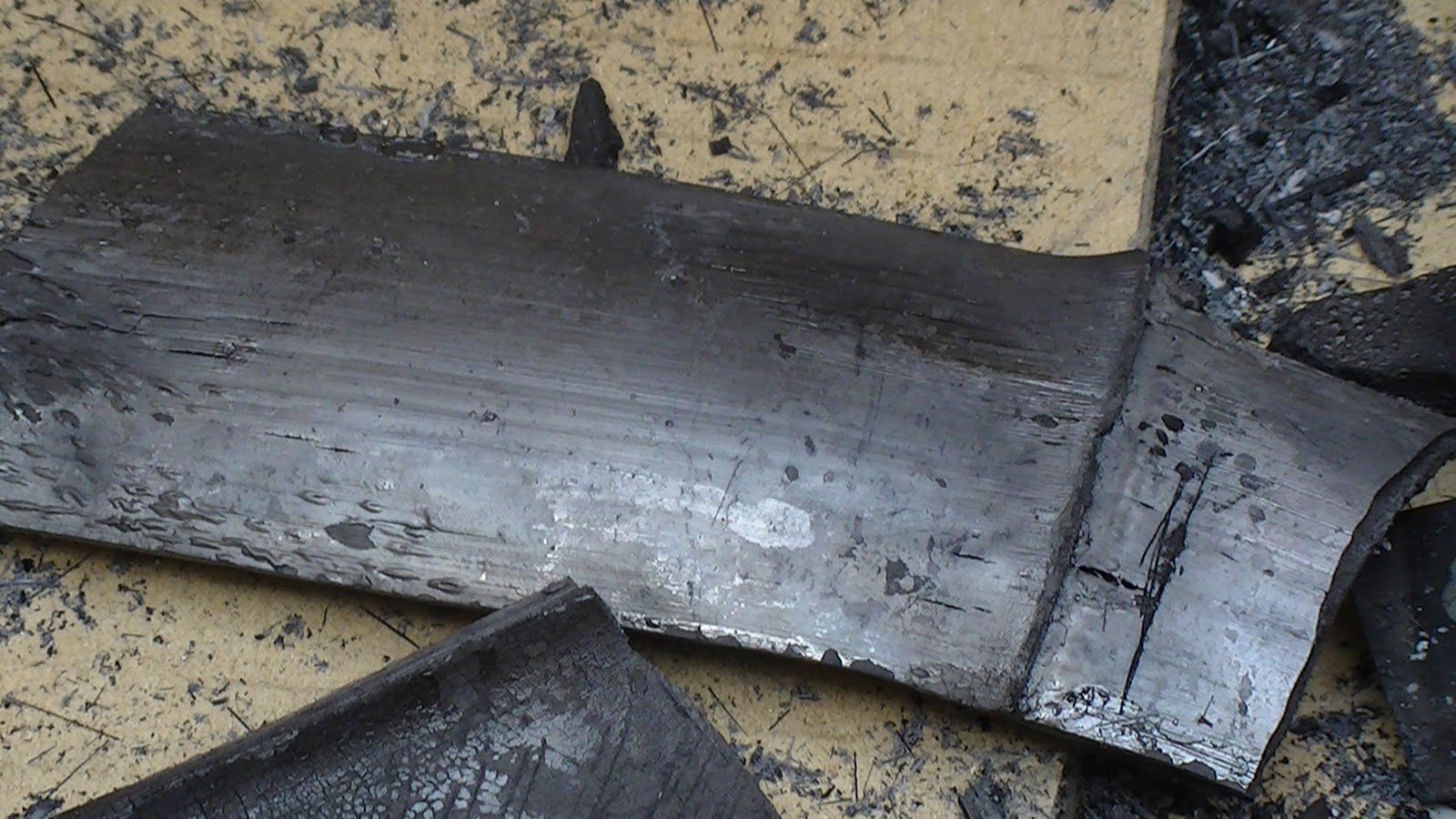
...And this is exactly why I can't get *anything* done. That up there is the biggest spider fossil ever found (thanks,
Alice!!). Not just any old spider, either. I took one look at the name and said, "Ooh! Ooh! Ooh!
Nephila!!"
That's right-- that amazing, 165-million-year-old Mid-Jurassic fossil is in the same genus as my beloved
Jorougumo (
Nephila clavata). This one, remember?
 |
| Nephila clavata (Jorougumo...the Binding Lady) Compare the legs! The Betty Grable of spiders...;-)) |
And with this fossil, genus
Nephila is now 130 million years older than previously suspected (the oldest known fossil prior having been a mere 34 million years old). But just look at those legs! There's no doubt that the Jurrasic had orb-web spiders. It's spiders that spin huge, sticky webs that sport those beautiful, curving, fine-tipped legs that can dance across an intricate web evolved to trap insects without getting stuck themselves. According to the
Smithsonian article, those fossil legs stretched
6 inches! (Go read the article--they think it may even have been able to catch and eat small bird-like dinosaurs!)
 |
| Carefully...carefully...or she will eat you...;-)) |
Unlike modern members of the
Nephila genus, however, some researchers think the Jurassic species was not sexually dimorphic--that the male was possibly roughly the same size as the female. A 130-mya male spider fossil of the
Cretaraneus genus found in Spain was the same size as the female, leading researchers to postulate that
Nephila at that time may also not have been dimorphic.
Wheee! I am so addicted to spiders:-))
 |
Araneus diadematus... Niwaonigumo (European Garden Spider)
Click to enlarge...you know you want to;-) |
The other day I was walking home from school and saw this *darling* little spider, who was so itty-wee my camera wouldn't focus on her. Had to put my hand behind her so she'd be in focus instead of the background foliage. But I don't know who she is! Spider Experts of teh Interwebs-- HELP! Who is this spider? Found
April 17 in Yokohama, Japan in a bush next to the street at eye level... should I put her on milk cartons?
Update: I do now-- should have done more homework before posting. But I thought I'd be days searching for "small brown spider" on Google image search... So, after smacking my head into the table when I realized that
she was sitting on an orb-web...well, duh. I could have put "small brown
orb-web spider" into Google and gotten there much sooner. So she's "just" a garden spider--also called the Diadem Spider or Cross Spider because of the markings on her back (interesting side note: "The white dots result from cells that are filled with guanine, which is a byproduct of protein metabolism."). In Japanese, she's "Niwaonigumo"--the Garden Ogre Spider.
Here's where things get interesting, though. Turns out,
Nephila clavata above,
Araneus diadematus here, and
Argiope bruennichi below used to all be classified in the
same genus--
Epeira, a sort of catch-all taxa for a wide range of spiders in the 19th century. Curvy legs and round web? Into
Epeira you go! Until, that is, somebody noticed that
Epeira was getting *awfully* full, and started splitting. The Golden Orb Web spiders (Jorougumo above, and also apparently the new Chinese fossil as well) were given an entirely distinct family to themselves (the Nephilidae) and four separate genera (
Clitaetra, Herennia, Nephila, and
Nephilengys). More than enough space for everyone to get his own bedroom.
Epeira was dumped in favor of
Araneidae (the former now being considered a junior synonym of the latter), into which family both the above
Araneus genus (my pretty Diadem Spider) and the
Argiope genus below (the gorgeous silver-faced Wasp Spider) were placed.
There! A nice, neat family, dusted and cleared of clutter. Sort of. Looking up Araneidae to see which genera were put there, I find... 30 genera
starting with the letter "A". 170 genera all together in the Araneidae family. I'd say there's a bit more spring cleaning to be done..;-)
__________________________________________
 |
| Oxytate striatipes... Wakabagumo |
I also found (and nearly stepped on--gomen!) this lovely one whose name in Japanese is "Wakabagumo". A name which means, appropriately, "Young Leaf Spider"--and he's exactly the color of a glowing new leaf. Yes, that's right, He in this case. This species is sexually dimorphic (the male being about 8-10mm, the female 12-13mm), but not so much as Jorougumo. The male is more easily distinguished by
his narrower abdomen than by his size. Not an orb Web spider, though-- this one is a Green Crab Spider (family Thomisidae), so called because of the way they hold their front legs and the fact that they can scuttle in a manner similar to crustaceans.
 |
| Tiny new Ginkgo leaves illuminated by the morning sun... |
See? Same color...
 |
| "Hey! Giant person! Look out!" |
...the only reason, in fact, delicate little Wakabagumo was saved from being squashed was a young grasshopper who jumped in front of me. I stopped to look at him, then thought I saw another. But, no! Almost the same size and color, but a new (to me) spider! Squee!
And I almost stepped on him! I tried to tiptoe after that, big hulking giant that I am...
*********
...and in other spider news...
 |
| Nagakoganegumo... Argiope bruennichi (Family: Araneidae) |
|
...striking silver-faced
Argiope, the Wasp Spider (a writing spider),
whom I posted about last fall, I'm hoping to see again soon. At the end of that post, I put up a photo of her egg sac, which was precariously pasted into a chain-link fence. I kept an eye on it all winter. And in January...
 |
| they made it! |
Now I have to think of baby spider names...
Mata asobou, ne!
p.s.-- I promise I will post the rest about Tsukushi. That's a whole 'nother rabbit hole, though... nodes and spores and strobili and...